Intelligence scales faster than execution.
Building coordination systems for autonomous agents and machines. From intent to execution.
Of execution failures in robotics are caused by coordination issues, not perception or planning errors.
Increase in system complexity when using hard-coded orchestration logic as agent count grows.
Downtime required for recovery when using adaptive coordination loops instead of full replanning.
As autonomous systems grow more capable, coordination becomes the dominant bottleneck.
Over the last few years, AI systems have improved at an unprecedented pace. Models reason better, plan faster, and generate increasingly complex behaviors. At the same time, robots and autonomous agents are becoming cheaper and more numerous.
But as systems scale, failures scale faster.
In multi-agent setups, a single coordination failure can invalidate an entire plan. Most autonomy stacks implicitly assume coordination. Planning modules generate sequences of actions, while execution layers assume ideal conditions. When the environment deviates — delays, partial failures, resource contention — systems degrade rapidly.
"Intelligence is no longer the limiting factor. Execution is."
Assembly does not attempt to replace intelligence or control stacks. It focuses on the layer between them. Treating coordination as infrastructure is no longer optional.

FIG. 01 — AUTOMATED FOUNDRY
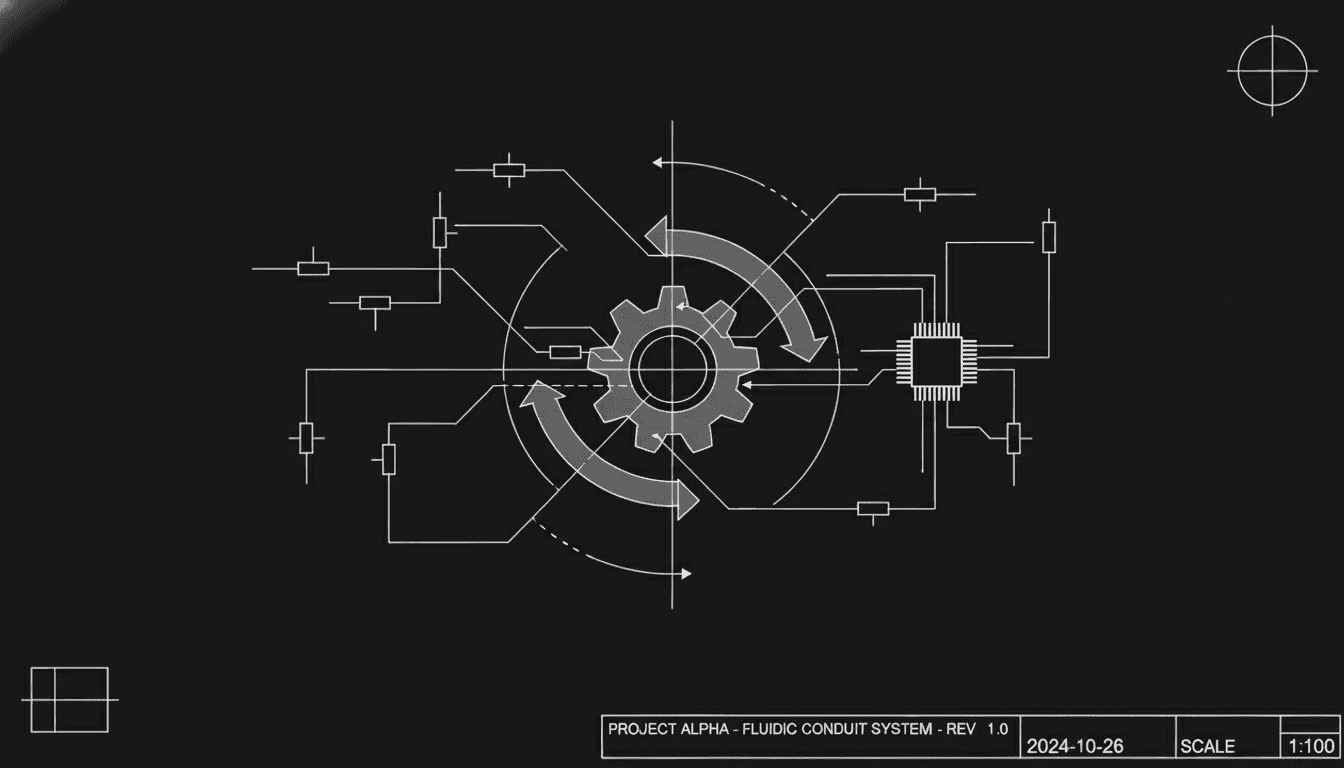
Assembly’s Coordination Loop
A minimal coordination loop built around three primitives that allow systems to adapt plans in real time.
01. INTENT
Encodes objectives and constraints without prescribing execution paths. Defines the "what" while leaving the "how" flexible.
02. PLANNING
Decomposes intent into tasks and dependencies while remaining provisional. Plans are generated to be broken and adapted.
03. ACTUATION
Executes actions through agents and continuously feeds real-world feedback back into the system for closed-loop control.